JIL's Take on AI: Kung Fu Robots Herald China's Fire Horse Leap in AI
China's robotics output, patent filings, and state-directed capital deployment signal a structural lead in humanoid robotics that Western commentators are systematically underestimating. The Spring Festival Gala was not a cultural moment — it was a product launch viewed by one billion people.
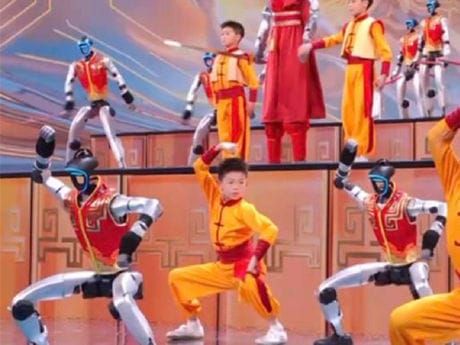
The 2026 Spring Festival Gala, watched by over one billion people, opened with Unitree robots performing kung fu. The choice was deliberate. China's government does not use its highest-viewership broadcast of the year for product placement by accident. The message was unambiguous: humanoid robotics is a national strategic priority, and China intends to lead it.
The Patent and Production Gap
The quantitative case for China's robotics lead is not speculative. Over the past five years, Chinese entities filed 7,705 robotics patents versus 1,561 from US entities — a 5:1 advantage. In 2025, China shipped approximately ten times more humanoid robots than the United States. Unitree, UBTECH, and Fourier Intelligence have each demonstrated walking, manipulation, and task-completion capabilities that match or exceed their US counterparts at a fraction of the cost. The Unitree H1 Pro retails at approximately $90,000 — roughly a quarter of comparable US systems.
The State Capital Advantage
China's robotics buildout is not market-driven in the Western sense. The 14th Five-Year Plan designated humanoid robotics as a strategic emerging industry, directing provincial governments to provide land, preferential financing, and procurement commitments to qualifying manufacturers. Beijing's Economic and Technological Development Zone has committed $1.5 billion in direct robotics investment. This state capital de-risks the early commercial stage that typically kills robotics startups — the gap between laboratory demonstration and economically viable deployment.
The parallel with solar and electric vehicles is instructive. In both sectors, Western analysts initially dismissed Chinese capabilities. State-directed capital then compressed the cost curve faster than market-based investment could have achieved, and the resulting scale advantages proved durable. The robotics transition appears to be following the same playbook.
Where Western Capital Is Mispriced
US and European robotics investment is concentrated in software and systems integration — Boston Dynamics, Figure AI, 1X Technologies. These are high-quality businesses building impressive technology. But the hardware cost curve is being driven by Chinese manufacturers, and hardware cost is the binding constraint on mass deployment. A humanoid robot costs $90,000 today; the widely cited target for volume deployment is sub-$20,000. That compression will be driven by Chinese supply chains, not Silicon Valley software.
Portfolio Positioning
For investors seeking exposure to humanoid robotics with a favourable risk/return profile, the most direct routes are: Chinese robotics manufacturers listed in Hong Kong or on A-shares (noting geopolitical risk premia); component suppliers in actuation, sensing, and battery management that supply across the ecosystem regardless of which platform wins; and downstream beneficiaries of labour cost reduction in manufacturing-intensive sectors where humanoid robots will first achieve commercial deployment. The Spring Festival Gala was the opening ceremony of a decade-long industrial transition. Investors who treat it as a novelty rather than a signal will be surprised by the pace of what follows.