
Research
Apple's $1,999 Foldable: Why the iPhone Duo Is a Pricing Bet, Not a Volume Supercycle
Apple's $1,999 iPhone Duo creates a premium growth tier, but the real test is pricing power and mix, not a mass-market foldable boom.
John Ian Lau is a contributing editor at Solomon Grey Capital, covering artificial intelligence, robotics, and deep-tech investment themes.
Research
Apple's $1,999 iPhone Duo creates a premium growth tier, but the real test is pricing power and mix, not a mass-market foldable boom.

Research
AI demand is real, but two private model labs may drive too much cloud growth. The first risk is a price war, not a capex collapse.
AI
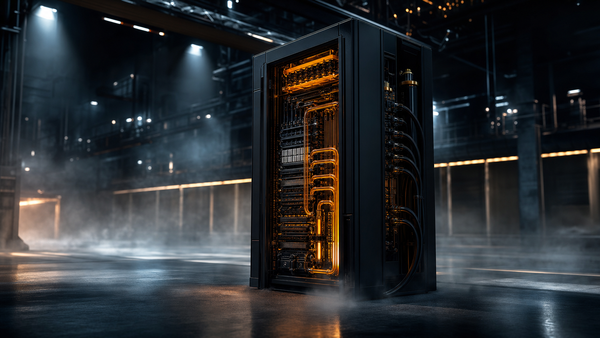
John Ian Lau — Technology & AI infrastructure desk The machine weighs two tons, contains roughly 1.5 million individual parts, and lists at approximately four million dollars. On July 21, Jensen Huang signed the first one built at Wistron Corporation's newly opened D1 smart factory in Fort Worth,
TSMC
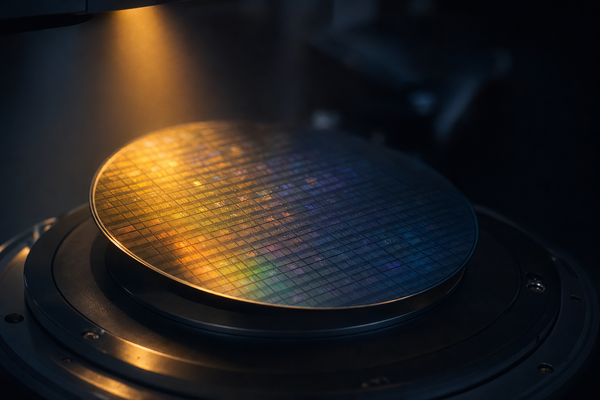
Taiwan Semiconductor lifted its 2026 capital budget to $60-64 billion from $52-56 billion, a 15 percent mid-year raise that the market read as an AI demand endorsement. That reading has the causal arrow reversed. The capex hike is a scarcity signal, not a demand signal. When a monopoly foundry

Enterprise Software
The last three weeks have produced the sharpest institutional divide on U.S. enterprise software in a decade. UBS cut ServiceNow to Neutral with a $100 target. Guggenheim upgraded to $125. BTIG is at $150. The dispersion is not about whether AI eats SaaS. It is about which pricing model wins the tra

AI
OpenAI's tilt toward a 2027 IPO didn't just delay a deal — it inverted every position pre-built around a defining 2026 catalyst. SoftBank fell 13%, the underwriting banks shed 4%, and the AI capex re-rating just lost its anchor. The trade hasn't died. It's been re-routed.

Research
Nvidia just raised $25 billion with $85 billion of orders. Morgan Stanley sees $570 billion of AI-related debt by year-end. The trade is not in the equities the bonds finance — it is in the spreads the bonds are setting.
Research
John Ian Lau — Technology & AI infrastructure desk For three years, the dominant narrative in AI infrastructure has been chip scarcity. On Thursday, Henry Kravis’s firm quietly announced that the bottleneck has moved — and that the next phase of the buildout will not be financed by hyperscaler balance sheets
Research
Broadcom's Q2 print triggered a 13% intraday sell-off. The $30 billion AI bookings figure buried in Hock Tan's remarks tells a different story.
Research
✍️ John Ian Lau — AI & robotics technology analyst EXECUTIVE SUMMARY The generative AI investment boom has moved from a speculative theme to a large-scale capital allocation cycle, with enterprise spending reaching $37 billion in 2025, up 3.2x from $11.5 billion in 2024. Startup funding also accelerated sharply:
Research
✍️ John Ian Lau — AI & robotics technology analyst EXECUTIVE SUMMARY The AI infrastructure supercycle is best understood as a multi-year capital formation phase rather than a short-lived technology trade. Private and public spending is now flowing into chips, data centers, power generation, grid upgrades, cooling, and network capacity,
Research
✍️ John Ian Lau — AI & robotics technology analyst EXECUTIVE SUMMARY The AI infrastructure supercycle is no longer a speculative theme; it is a multi-year capital formation wave centered on data centers, power, networking, and semiconductors. The largest U.S. hyperscalers are guiding toward roughly $635–690 billion of combined