China's Grassroots Sports Pivot Fuels a Private Equity Bet on Pickleball
China's 15th Five-Year Plan mandates 15-minute sports access circles in every urban area. Private equity is responding — and pickleball, driven by 40M+ global players, sits at the intersection of state mandate and commercial opportunity.
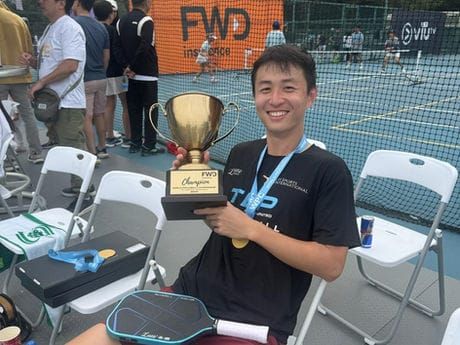
China's 15th Five-Year Plan (2026-2030) contains a mandate that has received less attention from international investors than it deserves: every urban Chinese resident should have access to sports facilities within 15 minutes of their home. This '15-minute happiness circle' is not an aspiration — it is a capital allocation directive backed by provincial government budgets, land grants, and policy loans. The private capital opportunity it creates is significant.
The Scale of the Mandate
China has approximately 900 million urban residents across 600+ cities. Building sports facilities within 15 minutes of each requires an estimated 3-5 million new venues of various types over the Plan period. The government cannot build and operate this infrastructure at speed without private capital and operating expertise. The policy design explicitly encourages public-private partnerships — government-subsidised land and initial capital combined with private management of operations, programming, and commercial revenue.
The sports categories prioritised in the Plan are those with high community participation rates, low barrier to entry, and convertible commercial models: badminton, table tennis, swimming, football, and — increasingly — pickleball. The government's designation of pickleball as an eligible sport for the infrastructure mandate reflects its extraordinary growth trajectory and the demographic breadth of its appeal.
Pickleball's Commercial Case
Pickleball has grown from approximately 3 million global players in 2018 to over 40 million today — a growth rate that outpaces every other racket sport in recorded history. The sport's characteristics are particularly favourable for the Chinese urban market: courts are smaller than tennis (enabling higher density in urban venues), the rules are learnable in minutes (reducing the barrier to adoption), and the social format accommodates mixed ages and skill levels simultaneously (maximising court utilisation and community stickiness).
The unit economics of a pickleball venue are demonstrably better than comparable racket sports. Court construction costs are approximately 30% lower than tennis. Membership yield per square metre is higher due to court density. Tournament format creates recurring event revenue on top of recurring membership revenue. A well-operated venue in a Tier 1 or Tier 2 Chinese city can achieve positive EBITDA within 18 months of opening.
TGG's Platform Thesis
Hong Kong-based TGG Group, operating through LIT Sports Global, is building what it describes as an integrated commercial ecosystem spanning 25+ venues across Hong Kong and the Greater Bay Area. The thesis is platform rather than individual venue: a branded, standardised operating model that generates economies of scale in procurement, programming, and media rights; a professional tournament circuit (LIT TLP) that builds brand equity and drives grassroots adoption; and a media and content business that monetises the audience created by the professional circuit.
This is the sports infrastructure model that has proven most value-generative historically: the platform aggregator that sets standards, controls the premium experience, and captures the media rights value that individual venue operators cannot. The LIV Golf analogy is instructive — TGG is deploying capital to professionalise and brand a sport at the moment of its growth inflection, using the government mandate as a structural tailwind.
Private Equity and Private Credit Angles
For private equity investors, the opportunity is in early-stage platform equity at a valuation that reflects venue count rather than platform value — the re-rating occurs when the media rights and tournament circuit components become meaningful contributors to EBITDA. For private credit investors, the recurring membership revenue and long-term venue leases provide the stable cash flow profile required for infrastructure-style lending. The government mandate provides a policy backstop that reduces venue-level operating risk meaningfully.
Risk Factors
The primary risks are execution (building 25+ venues simultaneously requires significant operational capability), regulatory (sports policy in China can change quickly), and competitive (Tencent, NetEase, and established fitness chains are all entering the pickleball space). The platform differentiation — professional circuit, standardised experience, branded community — is the moat. Its durability depends on TGG maintaining the quality of its operating model as the network scales.