Hedge Fund Trader Nominated to Lead the Fed
Trump's nomination of Kevin Warsh to chair the Federal Reserve is the most consequential monetary policy development of 2026. Markets lost $5 trillion in value on the announcement. Here is why the reaction is rational and what it means for portfolio positioning.
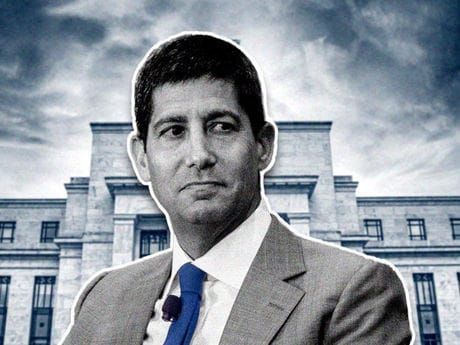
The nomination of Kevin Warsh — former Federal Reserve governor, protégé of Robert Rubin, and former partner to Stanley Druckenmiller — to chair the Federal Reserve is not a routine personnel decision. It represents a potential paradigm shift in the Fed's reaction function, and the $5 trillion market reaction is not an overreaction. It is the market repricing the probability distribution of interest rate paths over the next four years.
Who Warsh Is and What He Believes
Warsh served as a Federal Reserve governor from 2006 to 2011, a period that included the Global Financial Crisis and the first iterations of unconventional monetary policy. He was a dissenter on QE2 in 2010, arguing that the Fed was overstepping its mandate and risking long-term credibility. His academic and public writing since leaving the Fed has been consistently hawkish: he has argued that the Fed's inflation credibility has been materially damaged by its post-COVID response, that the Fed's balance sheet normalisation has been too slow, and that the Fed should adopt a more rules-based framework that reduces discretionary accommodation.
His partnership with Stanley Druckenmiller is analytically significant. Druckenmiller is one of the most successful macro investors in history and has been publicly critical of Fed policy since 2021. The intellectual alignment between the two men on monetary policy is close. Warsh's Fed would be materially more hawkish than the institution markets have priced under Powell.
The Market Impact: Anatomy of a $5 Trillion Event
Gold fell 10.9%. Silver collapsed 37.2%. Bitcoin declined 6%. The Nasdaq shed 0.94%. The pattern is consistent with a re-pricing of real interest rates upward — the asset classes most sensitive to real rates (precious metals, crypto, long-duration equities) declined most sharply. The bond market repriced the terminal rate 25-40 basis points higher across the curve. This is not panic — it is a rational update to the probability distribution of future monetary policy.
What a Warsh Fed Means
The Warsh Fed would almost certainly: maintain higher rates for longer than the current forward curve prices; accelerate balance sheet normalisation; resist political pressure from the White House to cut rates ahead of economic justification; and potentially adopt a more transparent rules-based framework (Taylor Rule variants) that reduces the Fed's discretionary accommodation bias. For long-duration assets, each of these is negative. For financial sector earnings and dollar-denominated assets, the picture is more nuanced — a credibly hawkish Fed could ultimately reduce the risk premium embedded in US assets if it is perceived as successfully restoring inflation credibility.
Portfolio Positioning
The Warsh nomination is not yet confirmed, and confirmation is not certain. But the nomination itself shifts the probability distribution sufficiently to warrant action. Reduce duration in fixed income portfolios. Increase allocation to financials and dollar-sensitive assets that benefit from a higher-for-longer rate environment. Review precious metals exposure — the 10.9% single-day gold decline may represent an attractive entry point if the structural dollar weakness thesis remains intact, but the rate sensitivity of gold means the tactical trade is more complicated. The Warsh nomination is the most important macro signal of Q1 2026.