Pickleball's Meteoric Rise: LIT TLP Tournament Underscores China's Ambitions
The inaugural LIT TLP tournament in Zhongshan drew 400+ players including world #1 Ryan Lam. What appears to be a sports event is actually the commercial validation of a thesis about China's grassroots sports infrastructure mandate and the private capital opportunity it creates.
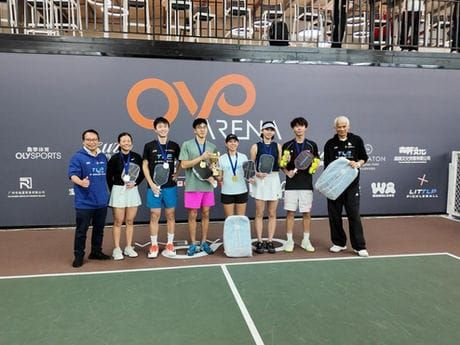
The inaugural LIT TLP (Legends International Pickleball Tour — The League Protocol) tournament in Zhongshan, Greater Bay Area, drew over 400 participants — including Ryan Lam, the world #1 ranked player on the Professional Circuit Series. The event generated sponsorship revenue, media coverage across Greater Bay Area platforms, and a venue partnership model that validates the commercial thesis underpinning TGG Holdings' pickleball infrastructure investment.
Why This Matters Beyond the Sport
Pickleball now claims over 40 million players globally, making it the fastest-growing racket sport in recorded history. But the Zhongshan tournament is analytically interesting not because of the sport itself but because of what it demonstrates about the commercial model. A professionally staged tournament in a second-tier Chinese city drew 400+ participants, generated multi-sponsor revenue, and produced broadcast-quality content for distribution across Chinese social media platforms. This is the unit economics test that determines whether a sports platform business is viable — and it passed.
China's 15-Minute Sports Circle
China's 15th Five-Year Plan (2026-2030) includes a specific mandate to create '15-minute sports access circles' in urban areas — a policy target that requires building sports facilities within 15 minutes of every urban resident. This mandate creates top-down demand for exactly the kind of multi-venue sports infrastructure that TGG's LIT platform is building. The government cannot build 25+ pickleball venues in Hong Kong and the GBA at speed; it needs private capital and operating expertise to execute the mandate. TGG is positioned precisely at this intersection.
The Commercial Model
The LIT TLP platform generates revenue from four sources: venue memberships (recurring, high-margin); tournament entry fees (variable, growing with the player base); sponsorship and naming rights (linear with audience reach); and media rights (the long-term value creation mechanism as the sport professionalises). The model is analogous to what has been built in golf (LPGA, PGA Tour Asia), padel (World Padel Tour), and CrossFit (CrossFit Games) — a professional circuit that drives grassroots adoption and creates a brand equity flywheel.
The Investment Opportunity
For private credit investors, the LIT platform represents a structured lending opportunity against stable, recurring venue revenue. For equity investors, the platform creation opportunity in Asian sports infrastructure is early-stage but following a well-established trajectory. Rocky Chan's closing remarks at the Zhongshan event framed the ambition directly: this is the beginning of a regional circuit, not a one-off event. The comparable is what LIV Golf did for Saudi Arabia's sports strategy — deploying capital to accelerate credibility, with the GBA government mandate as the structural tailwind that LIV never had.