What Just Happened on Wall Street?
The S&P 500 opened up 1.4%, traded as high as 6,800, then closed down 1.5% at 3,616. An intraday swing of 4.3 percentage points — only the third such occurrence since 2000. Goldman Sachs called it a 'perfect storm.'
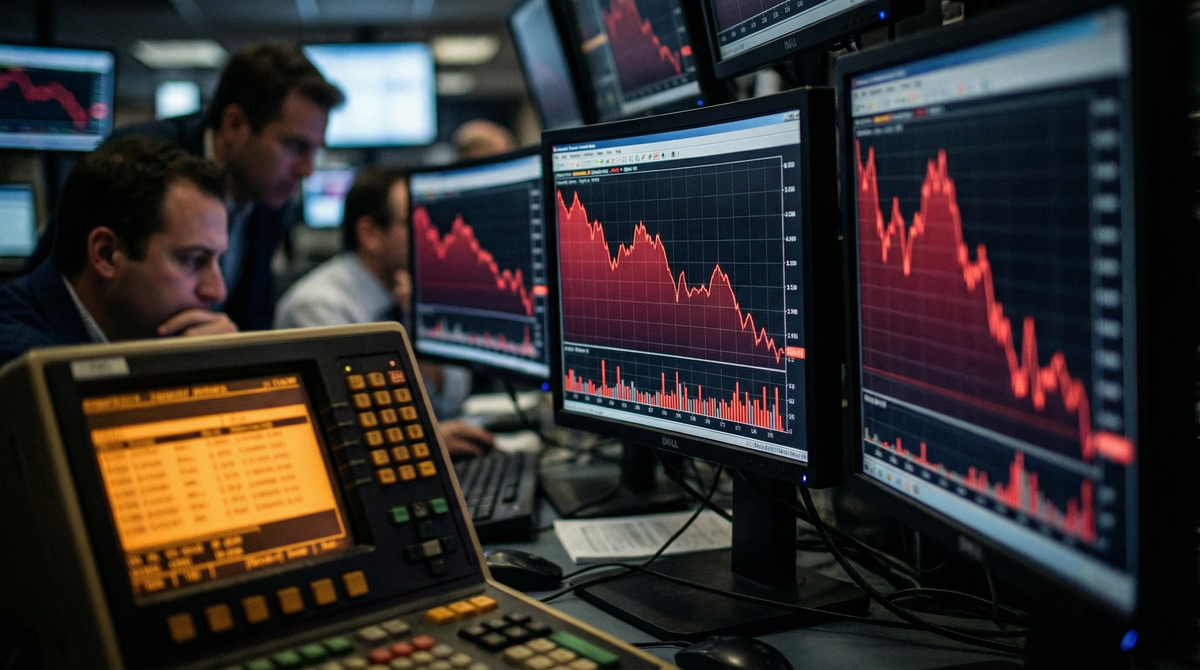
In one of the most violent intraday reversals in modern market history, the S&P 500 opened up 1.4%, traded as high as 6,800, and closed down 1.5% at 3,616.
That intraday swing of more than 4.3 percentage points from peak to trough marks only the third such occurrence since 2000. The previous two were April 7, 2020 (COVID volatility) and April 8, 2025 (post-Liberation Day shock).
Goldman Sachs' trading desk described the session as a 'perfect storm' of overlapping pressures — a simultaneous squeeze on short positions, a momentum reversal signal triggering systematic selling, and a macro catalyst that forced discretionary funds to reduce gross exposure.
VIX futures are now pricing 25% annualised volatility into year-end — the highest reading since April. For options traders, that is an elevated but not extreme reading. For long-only equity investors, it is a reminder that drawdown velocity in this market can be severe and rapid.
The appropriate response to sessions like this is not reactivity. It is a pre-committed framework for position sizing under elevated volatility — one that does not require real-time decision-making when prices are moving fastest.