What Just Happened on Wall Street?
The S&P 500 opened up 1.4%, reached 6,800, and closed down 1.5% at 3,616. An intraday swing of 4.3 percentage points — only the third occurrence since 2000. Goldman Sachs called it a perfect storm. Here is our analysis of what actually happened and what it means.
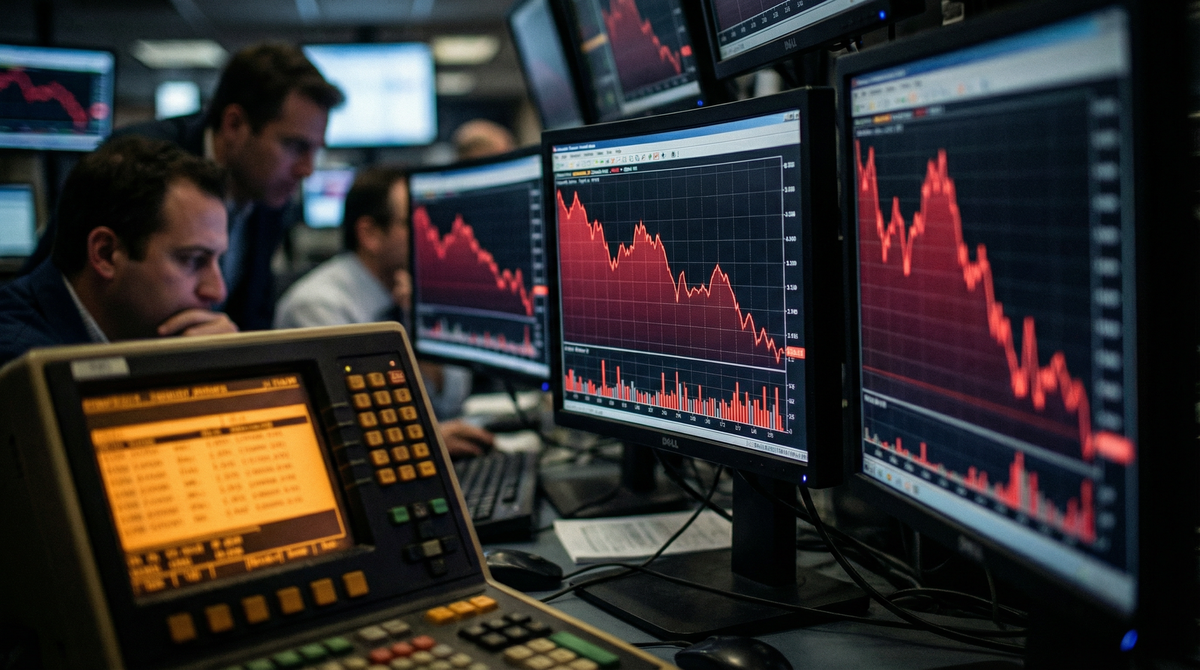
In one of the most violent intraday reversals in modern market history, the S&P 500 opened up 1.4%, traded as high as 6,800, and closed down 1.5% at 3,616. The intraday swing of 4.3 percentage points from peak to trough marks only the third such occurrence since 2000. The previous two were April 7, 2020 (peak COVID volatility) and April 8, 2025 (post-Liberation Day shock). Goldman Sachs' trading desk described the session as a 'perfect storm of overlapping pressures.'
The Anatomy of the Reversal
The morning gap higher was driven by a short squeeze in technology names following an overnight announcement that several AI capex commitments were being accelerated. The gap attracted momentum-following systematic funds, pushing the index to 6,800 and generating significant unrealised gains in the first 45 minutes of trading. This is the typical setup for a violent reversal: a momentum-driven gap that pulls in systematic buyers near the high.
The reversal was triggered by three simultaneously occurring pressures: the Warsh Fed nomination announcement at 10:47am Eastern (causing a rapid repricing of rate expectations); a large institutional seller executing a pre-scheduled block trade that created visible order flow imbalance; and the activation of momentum-reversal signals in systematic funds that had bought the morning gap, whose models automatically reversed to short as the move exceeded normal range boundaries.
The Systematic Trading Factor
The 4.3 percentage point intraday range is a signature of systematic fund dominance in daily market microstructure. Human portfolio managers do not generate these dynamics — the speed of the reversal (from high to low in approximately 90 minutes) exceeds the decision-making speed of discretionary traders. The relevant data point: systematic and quantitative funds now represent approximately 35% of total US equity trading volume on any given day. When their models simultaneously signal the same direction change, the resulting price action is violent and has limited fundamental information content.
What the VIX Tells Us
VIX futures priced 25% annualised volatility into year-end — the highest reading since April. This is elevated but not extreme: the 2022 bear market sustained VIX above 30 for months; the COVID peak reached 85. A VIX at 25 reflects uncertainty, not panic. The implied volatility surface suggests options markets are pricing approximately a 3% weekly move as a 1-standard-deviation expectation — which is consistent with a market navigating genuine macro uncertainty (Warsh nomination, tariff regime change) rather than a fundamental credit or liquidity event.
The Investment Response
Sessions like this test the process discipline that separates institutional from retail behaviour. The appropriate response is to evaluate whether the fundamental thesis for each position has changed — and to be honest about the answer. The Warsh nomination is a genuine fundamental development that warrants portfolio adjustment. The systematic-driven intraday volatility is noise. The investors who made portfolio changes at 12:30pm on a 4.3-point intraday swing based on price action rather than fundamental re-assessment were almost certainly making a mistake. The investors who used the day's closing price as an opportunity to add to positions with unchanged fundamental theses were almost certainly making the right decision.